
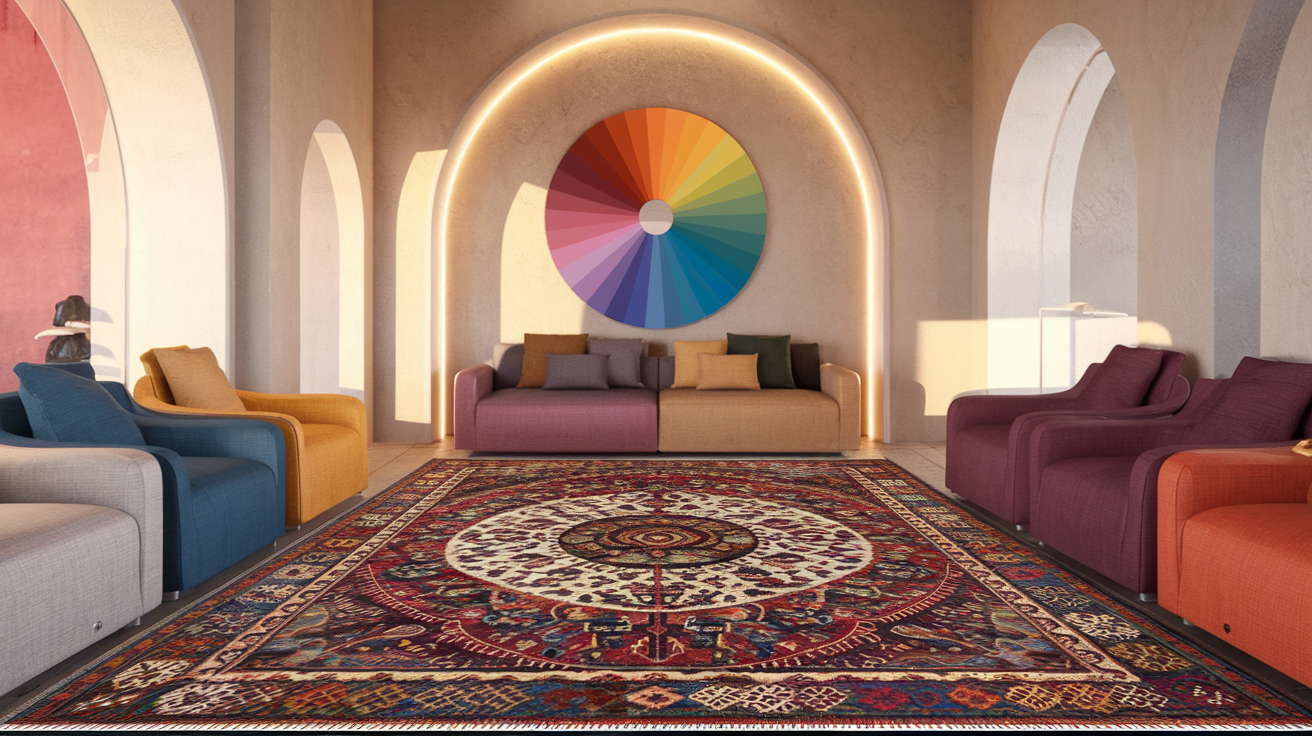
Ever stood in the middle of your living room and thought, “This oriental rug clashes with literally everything I own”? You’re not alone. About 65% of homeowners admit they’ve made costly decor mistakes because they didn’t understand color harmony.
I’m going to save you from becoming another statistic with a straightforward guide to choosing the perfect oriental rug for your color palette.
The right oriental rug doesn’t just sit on your floor—it ties your entire room together through intentional color relationships. Think of it as the foundation that anchors your space, not an afterthought you toss down once everything else is placed.
But here’s where most people go wrong: they focus only on matching colors instead of understanding how colors actually work together. And that difference? It’s everything.
Understanding Color Theory Basics for Interior Design

Primary, Secondary, and Tertiary Colors: Your Foundation for Rug Selection
Ever noticed how some Oriental rugs just “pop” in a room while others fall flat? It all comes down to understanding your color basics.
Primary colors—red, blue, and yellow—are the building blocks of all other colors. Many traditional Oriental rugs feature these bold hues as dominant elements. A classic Persian rug with a deep blue field and red medallion creates instant visual impact.
Secondary colors—green, orange, and purple—emerge when you mix primaries. These colors often appear as accent details in rugs. That gorgeous Tabriz with green borders? It’s playing with secondary colors to create depth.
Tertiary colors hit the sweet spot between primary and secondary (think yellow-orange or blue-green). These subtle blends give many Oriental rugs their sophisticated, nuanced appearance.
When shopping for your perfect rug, identify your room’s existing color scheme first. Got a lot of primary colors already? Consider a rug with complementary tertiary colors for balance. Working with a neutral space? A rug with bold primary colors can serve as your room’s anchor piece.
The Color Wheel: A Practical Tool for Harmonious Design Choices
The color wheel isn’t just for art class—it’s your secret weapon for rug selection.
Complementary colors sit opposite each other on the wheel (blue/orange, red/green, yellow/purple). A room with blue furniture? An Oriental rug featuring orange or rust tones will create dynamic tension that makes both colors look more vibrant.
Analogous colors are neighbors on the wheel. Think blue, blue-green, and green. Rugs with analogous color schemes create a serene, cohesive feel—perfect for bedrooms or reading nooks.
Triadic color schemes use three colors equally spaced around the wheel. Many traditional Caucasian rugs employ this bold approach, featuring red, yellow, and blue in equal measure.
The smartest interior designers keep a color wheel handy when rug shopping. It eliminates guesswork and helps you predict how colors will interact in your space.
Warm vs. Cool Colors: How They Affect Room Atmosphere
The temperature of your rug colors dramatically shifts how a room feels.
Warm colors (reds, oranges, yellows) advance visually and energize spaces. A Bokhara rug with deep crimson tones makes a large room feel cozier and more intimate. These rugs shine in north-facing rooms that need warmth.
Cool colors (blues, greens, purples) recede visually and create calm. That Persian Nain with its intricate blue patterns? It’s perfect for making a small space feel larger or cooling down a sun-drenched southern exposure.
Some rugs masterfully balance both warm and cool elements. A Heriz with a warm terracotta field and cool blue accents can bridge different temperature zones in open-concept living spaces.
Your climate should influence your choice too. Desert dwellers might appreciate the psychological cooling effect of a predominantly blue Kurdish rug, while those in northern regions might gravitate toward the visual warmth of a rich, red Shiraz.
Color Psychology: Emotional Responses to Different Rug Colors
Your rug colors trigger real emotional responses—whether you realize it or not.
Red rugs stimulate conversation and appetite. They’re naturals for dining rooms and social spaces. That antique Ferahan with ruby tones? It’s subtly encouraging your dinner guests to linger longer.
Blue rugs promote tranquility and focus. They’re ideal for home offices, bedrooms, or meditation spaces. A blue-dominant Oushak creates a sanctuary-like feeling.
Yellow and gold tones in rugs boost optimism and creativity. Many Tabriz rugs use gold highlights to create a sense of warmth and welcome in entryways.
Green rugs connect us to nature and reduce stress. A rug with verdant botanical motifs brings the outdoors in and creates a restorative atmosphere.
Purple has traditionally signified royalty and luxury. A rug with aubergine or amethyst tones adds instant sophistication to any space.
The most successful rooms acknowledge these psychological effects and use rug colors strategically to support the room’s intended function and mood.
Identifying Your Existing Color Palette
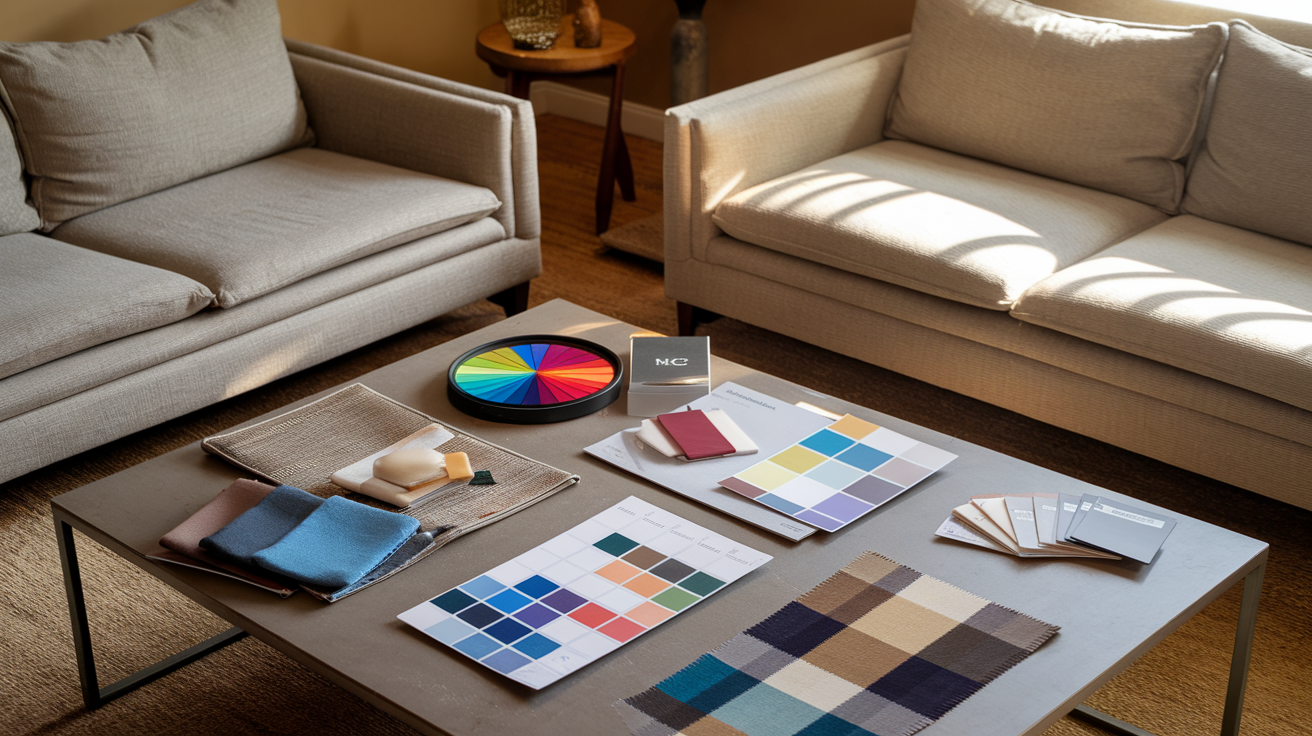
Analyzing Your Current Space: Walls, Furniture, and Accents
Before diving into rug shopping, take a good look around your room. What colors dominate your space right now? Your walls make up the largest color surface in any room, so they’re your starting point. Are they crisp white, warm beige, bold navy, or something else entirely?
Next, check out your major furniture pieces. That charcoal sofa or oak dining table brings substantial color to your space. Don’t forget the smaller stuff either – curtains, throw pillows, artwork, and decorative objects all contribute to your existing palette.
Take photos of your space in natural daylight. Colors look different depending on lighting, and natural light reveals their truest form. This simple step helps you avoid the dreaded “it looked different in the store” syndrome when choosing your Oriental rug.
Determining Dominant, Secondary, and Accent Colors
Every well-designed room follows a color hierarchy:
- Dominant colors (60%): These are your major surfaces – walls, large furniture pieces, and flooring
- Secondary colors (30%): Medium-sized elements like accent chairs, curtains, or smaller furniture
- Accent colors (10%): Decorative items, artwork, pillows, and small accessories
Grab some paint chips that match your existing colors or use a color-matching app. This helps you clearly identify what you’re working with and visualizes your current palette.
The magic happens when your Oriental rug connects elements from these different color tiers. Maybe it pulls in your dominant wall color while introducing complementary accent hues that match your throw pillows.
Identifying Your Design Style’s Color Characteristics
Your design style naturally leans toward certain color families:
- Modern/Contemporary: Clean neutrals with bold accent colors
- Traditional: Rich jewel tones, burgundies, navy blues with gold accents
- Bohemian: Saturated, earthy colors with unexpected combinations
- Scandinavian: Crisp whites, soft grays, and light woods with minimal color
- Mid-Century Modern: Mustard yellows, teals, oranges against neutral backgrounds
Oriental rugs work across all these styles, but knowing your design preference helps narrow your color choices. A traditional Persian rug with deep reds and blues fits beautifully in traditional spaces but can also create striking contrast in minimalist rooms.
Seasonal Color Considerations for Long-Term Satisfaction
Your room’s appearance shifts with the seasons. Natural light changes dramatically from summer to winter, especially in northern climates.
Those gorgeous ruby reds and emerald greens in your Oriental rug might feel cozy during winter holidays but consider how they’ll feel during bright summer months. Will that richness feel heavy or still balanced?
Smart approach: Choose rugs with versatile color combinations that can flex across seasons. Rugs with both warm and cool tones give you flexibility to adjust your room’s feel by simply swapping out smaller accessories as seasons change.
Creating a Digital Color Board for Visualizing Combinations
Stop trying to keep all these color decisions in your head. Technology makes visualization so much easier.
Create a digital mood board using:
- Pinterest boards for room inspiration
- Apps like Canva or Milanote to combine images
- Paint company visualization tools (Benjamin Moore, Sherwin-Williams)
Add photos of your existing space, furniture pieces, paint chips matching your walls, and potential rug options. This visual reference prevents costly mistakes and helps you see how different Oriental rug colors will interact with your existing palette.
Your digital board becomes your shopping companion, letting you compare potential rugs against your current colors without relying on memory alone.
Oriental Rug Color Schemes That Enhance Any Space
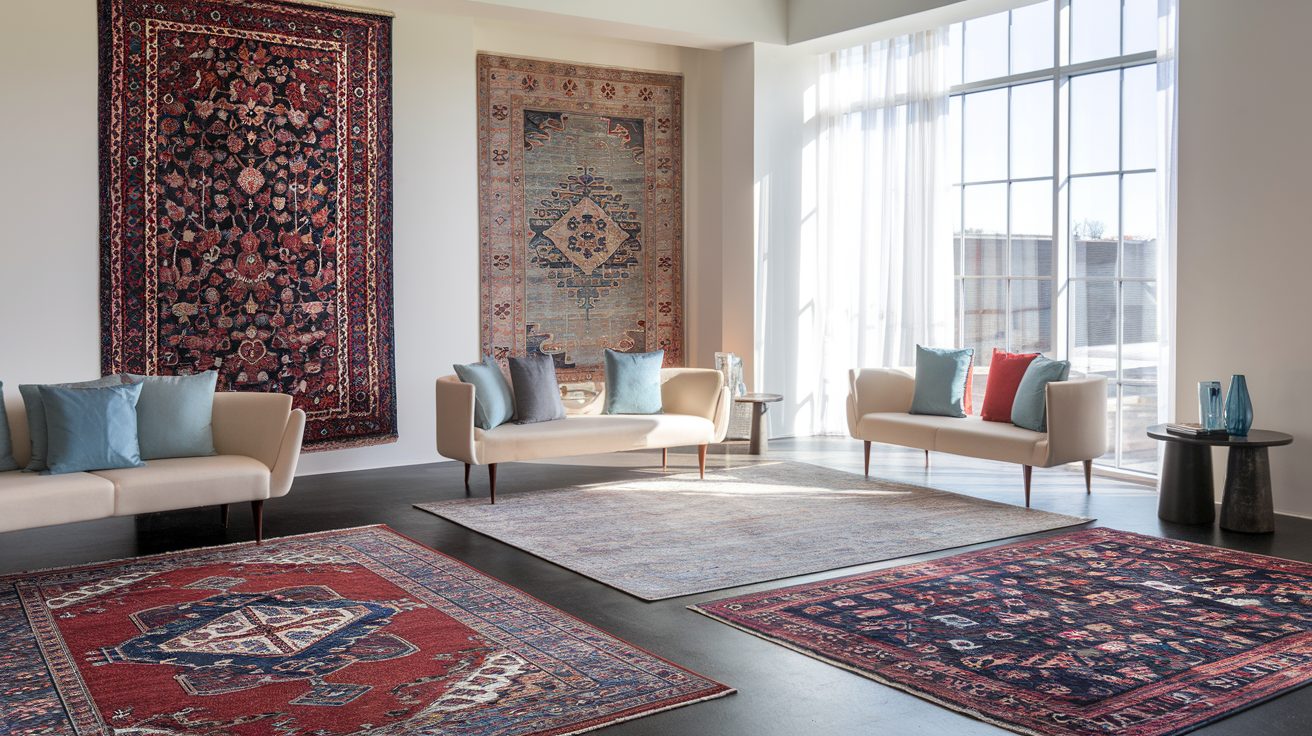
Monochromatic: Subtle Elegance Through Varying Shades
Ever walked into a room that just feels right but you can’t put your finger on why? That’s the magic of monochromatic rugs working their subtle charm.
A blue Persian rug with various shades from navy to sky creates depth without overwhelming your space. The beauty lies in the variations – think rich sapphire blues fading into softer powder tones, all woven into one cohesive masterpiece.
The trick is picking a base color that complements your existing palette. Got warm neutrals? A monochromatic rust or terracotta rug grounds the space while adding warmth. For cooler schemes, jade or emerald variations bring tranquility.
What makes these rugs special is their versatility. They’re perfect for:
- Small spaces that would feel cluttered with multi-colored patterns
- Rooms with statement furniture pieces that need subtle floor anchoring
- Creating a sense of luxury through texture rather than bold color contrasts
A monochromatic Tabriz rug with ivory, cream and beige tones doesn’t scream for attention – it whispers sophistication.
Complementary: Bold Statements with Opposite Colors
Want your rug to be the conversation starter? Complementary color schemes are your best friend.
These Oriental rugs feature colors opposite each other on the color wheel – think blue and orange, purple and yellow, or the classic red and green. The dynamic tension between these opposites creates visual energy that’s impossible to ignore.
A Persian Qashqai rug with deep navy blues against warm amber and copper tones practically vibrates with energy. The contrast pops without being garish when the colors share similar intensity levels.
The secret to pulling this off? Balance. A predominantly red Heriz rug with emerald green accents works because the green is used strategically in the medallion or border patterns.
These rugs work wonders in:
- Neutral rooms needing a focal point
- Spaces that feel flat or one-dimensional
- Areas where you want to define separate zones within open floor plans
The boldness of complementary schemes doesn’t mean they’re loud – a well-crafted Oriental rug balances these opposing forces with artisanal precision.
Analogous: Creating Flow with Adjacent Color Families
Picture the gentle transition of leaves changing in fall – that harmonious flow is what analogous color schemes deliver in Oriental rugs.
These rugs feature colors that sit next to each other on the color wheel, creating a natural progression that’s easy on the eyes. A Sultanabad rug in greens and blues mimics the organic relationship we see in nature between sky and foliage.
The beauty of analogous schemes is their natural cohesion. A Kerman rug with rose, burgundy, and purple tones creates a rich visual experience without jarring transitions. Your eye glides across the surface, appreciating each variation.
These rugs excel at:
- Unifying spaces with existing color themes
- Creating calm, harmonious environments
- Adding depth without introducing contrast shock
The subtlety of analogous color relationships means these rugs can be more intricate in their patterns. A Nain rug with various blues transitioning to gentle greens can showcase elaborate floral motifs without overwhelming the senses.
Triadic: Balanced Energy Using Three Equidistant Colors
The triadic color scheme is the secret weapon of interior designers who want balance and visual interest in equal measure.
These Oriental rugs feature three colors spaced evenly around the color wheel – like red, yellow, and blue. The mathematical precision of this relationship creates a naturally balanced composition that feels right.
An antique Kashan with ruby reds, golden yellows, and navy blues delivers energy with sophistication. The colors play off each other without competing for attention.
What makes triadic schemes so special is their versatility. You can:
- Use all three colors in equal measure for vibrant spaces
- Let one color dominate with the others as accents for subtle complexity
- Vary the saturation levels for a more nuanced approach
A Bakhtiari rug using triadic colors often features geometric patterns that further enhance the mathematical harmony of the color relationship. The result is a rug that feels both exciting and balanced – the perfect combination for living spaces that need to be both energizing and livable.
Regional Oriental Rug Styles and Their Signature Colors
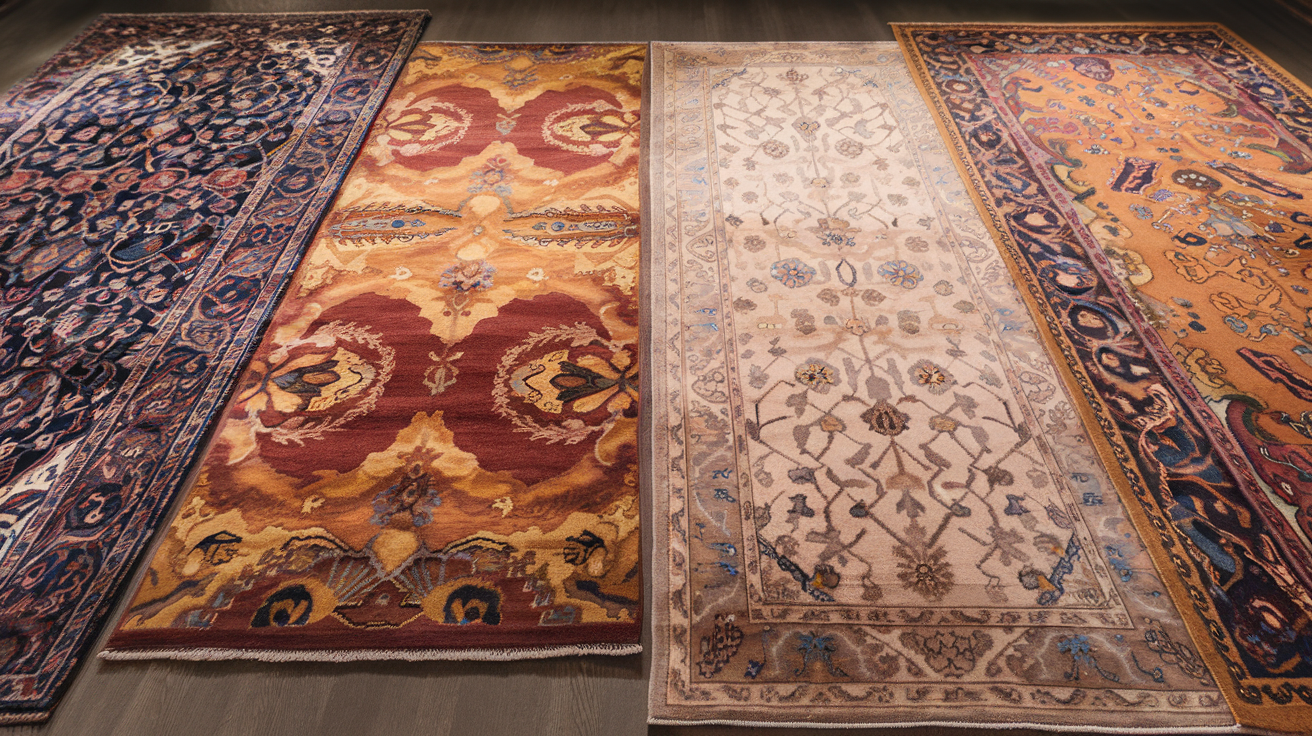
Persian Rugs: Rich Reds, Blues, and Traditional Color Combinations
Ever noticed how Persian rugs just command attention in any room? There’s a reason for that. These iconic pieces feature those deep, rich reds that seem to tell stories of ancient royalty. Blues range from midnight navy to turquoise, often working as the contrasting field color against vibrant medallions.
The traditional Persian palette isn’t random—it’s built on centuries of cultural meaning. Red symbolizes wealth and courage, while blue represents power and protection. You’ll find these colors dancing together in classic Tabriz, Kashan, and Isfahan rugs, often complemented with ivory, gold, and sometimes touches of green.
What makes Persian rugs truly special is their color harmony. Even with 8-12 different colors in a single rug, nothing feels out of place. The colors follow a time-tested formula of primary hues balanced with neutrals.
Try this in your home: A Persian Heriz with its rust-red tones works magic in rooms with wooden furniture, while a blue-dominant Nain rug cools down sunny spaces beautifully.
Turkish Designs: Earthy Tones and Mediterranean Influences
Turkish rugs speak a different color language than their Persian cousins. Think sun-baked clay, warm terracotta, golden wheat, and soft olive greens—colors that could’ve been plucked straight from the Turkish countryside.
What I love about Turkish designs is how they capture that Mediterranean warmth. The Oushak rugs are particularly famous for their mellow, amber-toned palettes that seem to glow from within. These colors aren’t shouting for attention; they’re inviting you to sink into them.
The Turkish approach to color is more about texture and patina. Many Turkish rugs use vegetable dyes that age beautifully, developing this incredible depth over time. A new Turkish rug is gorgeous, but a vintage one with its softened colors? That’s something else entirely.
These rugs work perfectly in spaces where you want warmth without overwhelming pattern. They’re the unsung heroes of neutral rooms, adding dimension without disrupting the calm.
Moroccan Patterns: Vibrant Contrasts and Modern Appeal
Moroccan rugs break all the rules—and that’s exactly why designers can’t get enough of them. Unlike their Asian counterparts, these North African beauties often embrace stark, high-contrast palettes. Think bold black geometric patterns against creamy white backgrounds in Beni Ourain rugs, or electric blues paired with fiery oranges in urban Moroccan designs.
The color story of Moroccan rugs is all about drama and energy. Berber tribal rugs might feature just two colors, while rugs from Rabat or Fez explode with rainbows of saturated hues that would make a color theorist swoon.
What’s fascinating is how these traditionally-patterned rugs feel so modern. That black and white Beni Ourain? It looks like it was designed for today’s minimalist interiors, not crafted by nomadic tribes centuries ago.
These rugs are color chameleons—they can be the statement piece in a neutral room or surprisingly complement eclectic color schemes. The vibrant contrasts bring spaces alive in ways subtle rugs never could.
Indian and Pakistani Rugs: Jewel Tones and Intricate Color Work
Indian and Pakistani rug makers are basically color magicians. Their signature palette reads like a treasure chest inventory: emerald greens, sapphire blues, ruby reds, and amethyst purples—all rendered in stunning detail.
The color saturation in these South Asian rugs is unmatched. Where Persian rugs might use color judiciously, Indian rugs embrace it with open arms. Just look at a Jaipur rug with its explosive pink and orange combinations that somehow work perfectly together.
Pakistani rugs, especially those from the Peshawar region, often feature incredible abrash—those intentional color variations that give each section of the rug its own personality. It’s like getting multiple color stories in one piece.
What’s exceptional about these rugs is their versatility. They can transform conservative spaces with just enough color to feel fresh without overwhelming. In maximalist rooms, they hold their own among other bold elements.
Chinese and East Asian Designs: Symbolic Colors and Minimalist Approaches
Chinese rugs speak a completely different color language—one of restraint and symbolism. While other Oriental rugs might feature dozens of hues, traditional Chinese designs often limit themselves to a handful of carefully selected colors, each with specific meaning.
The classic indigo blue represents immortality, while imperial yellow symbolizes power. You’ll find rich gold tones representing prosperity, and soft peach colors symbolizing longevity. These aren’t just pretty colors—they’re meaningful wishes woven into the home.
The beauty of Chinese rugs lies in their negative space. Unlike their Middle Eastern counterparts that often cover every inch with pattern, Chinese designs use empty fields of color to create breathing room around central motifs.
Modern Chinese and East Asian rugs often embrace monochromatic schemes—playing with texture rather than color contrast. These pieces are perfect for contemporary spaces where you want subtle sophistication rather than bold color statements.
The minimalist approach makes these rugs timeless additions to any color palette—they enhance without competing.
Practical Selection Strategies for Color-Coordinated Rugs
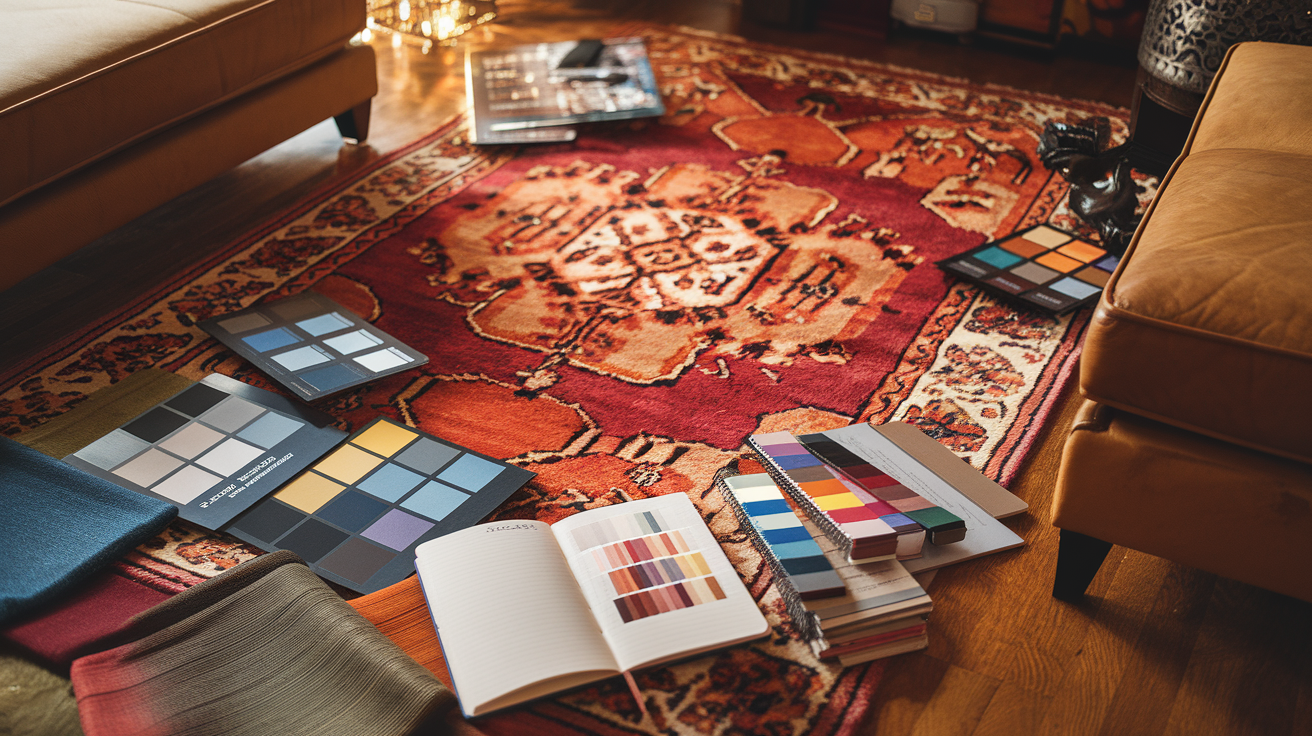
Size and Proportion: How They Affect Color Impact
Ever noticed how a tiny splash of red can feel like a whisper in a large room, but the same red in a smaller space practically shouts? That’s exactly what happens with oriental rugs.
A large rug with bold colors can anchor an entire room, creating a strong foundation for your color scheme. If you’ve got a spacious living area, don’t shy away from vibrant, richly-colored rugs – they won’t overwhelm the space but rather define it.
On the flip side, in compact rooms, consider how color intensity scales up. That gorgeous deep burgundy rug might look amazing in the store, but in your cozy study, it might feel like it’s swallowing the space whole. For smaller areas, rugs with lighter backgrounds and more delicate color accents often work wonders.
And here’s something most people miss: the proportion of color matters as much as the color itself. A rug where indigo blue makes up 70% of the design creates a dramatically different feeling than one where the same blue appears in just 20% of the pattern.
Pattern Density: Balancing Visual Weight in Your Color Scheme
Think of pattern density as the “loudness” setting for your rug’s colors. Dense, intricate patterns blend colors together when viewed from a distance, creating a more unified, sometimes muted effect. Step back from that traditional Tabriz rug, and those distinct reds and blues start to marry into a rich, complex color impression.
Sparse patterns, by contrast, let each color sing its own note. That contemporary rug with scattered geometric shapes in teal against a cream background? Each color maintains its distinct identity.
This matters tremendously when coordinating with your room. If your space already features busy wallpaper or statement furniture pieces, a densely patterned rug might create visual chaos. Instead, opt for rugs where the pattern spacing gives your eye some breathing room.
The sweet spot often lies in creating contrast:
- Minimalist rooms → More intricate patterns add interest
- Visually busy rooms → Simpler patterns provide balance
Don’t just consider what colors are in your rug – think about how the pattern density affects how those colors read in your space.
Testing Before Buying: Light Conditions and Sample Viewing
That stunning emerald green oriental rug that looked perfect in the showroom might turn murky under your home’s lighting. Why? Because color is ultimately about how light interacts with materials.
Natural light shows colors most accurately, but changes throughout the day. That Persian rug with gold accents might glow warmly at sunset but appear flat and dull at noon. Meanwhile, LED lighting can emphasize blues and greens, while incandescent bulbs enhance reds and oranges.
Smart rug shoppers always:
- Borrow samples or small swatches to test in their actual space
- View the rug during different times of day
- Check how it looks under both natural and artificial lighting
Here’s a quick breakdown of how different lighting affects rug colors:
| Light Source | Effect on Colors |
|---|---|
| North-facing natural light | Cooler, bluer tones |
| South-facing natural light | Warmer, more golden tones |
| LED lighting | Emphasizes blues and cooler tones |
| Incandescent | Enhances reds and warmer tones |
| Halogen | Most similar to natural daylight |
Photos online rarely capture true colors, so whenever possible, see the rug in person before committing.
Future-Proofing Your Choice: Selecting Colors That Accommodate Change
Your home isn’t frozen in time – your taste evolves, furniture gets replaced, and walls get repainted. Choosing a rug that can roll with these changes saves you from buying a new one every few years.
Multi-colored oriental rugs are secretly the chameleons of home decor. That antique Heriz with its palette of burgundy, navy, cream, and touches of sage green gives you multiple color hooks to build around as your style changes. Today it might complement your navy sofa, but tomorrow it’ll work just as beautifully with new sage green accent chairs.
Color depth also matters for longevity. Rugs with rich, complex colors – those that seem to change slightly as you look at them – age more gracefully than those with flat, single-dimensional colors. These complex colors develop character over time rather than simply fading.
Consider creating a “color bridge” with your rug – choose one with both your current color scheme AND colors you’re drawn to but haven’t incorporated yet. This gives you decorating flexibility for years to come.
The most future-proof choices typically feature:
- A mix of warm and cool tones
- Both neutral and accent colors
- Timeless color combinations (navy/burgundy, rust/teal, cream/gold)
- Colors with depth and subtlety rather than trendy, of-the-moment hues
Remember, the best rugs don’t just fit your space today – they grow with it.
Troubleshooting Common Color Challenges
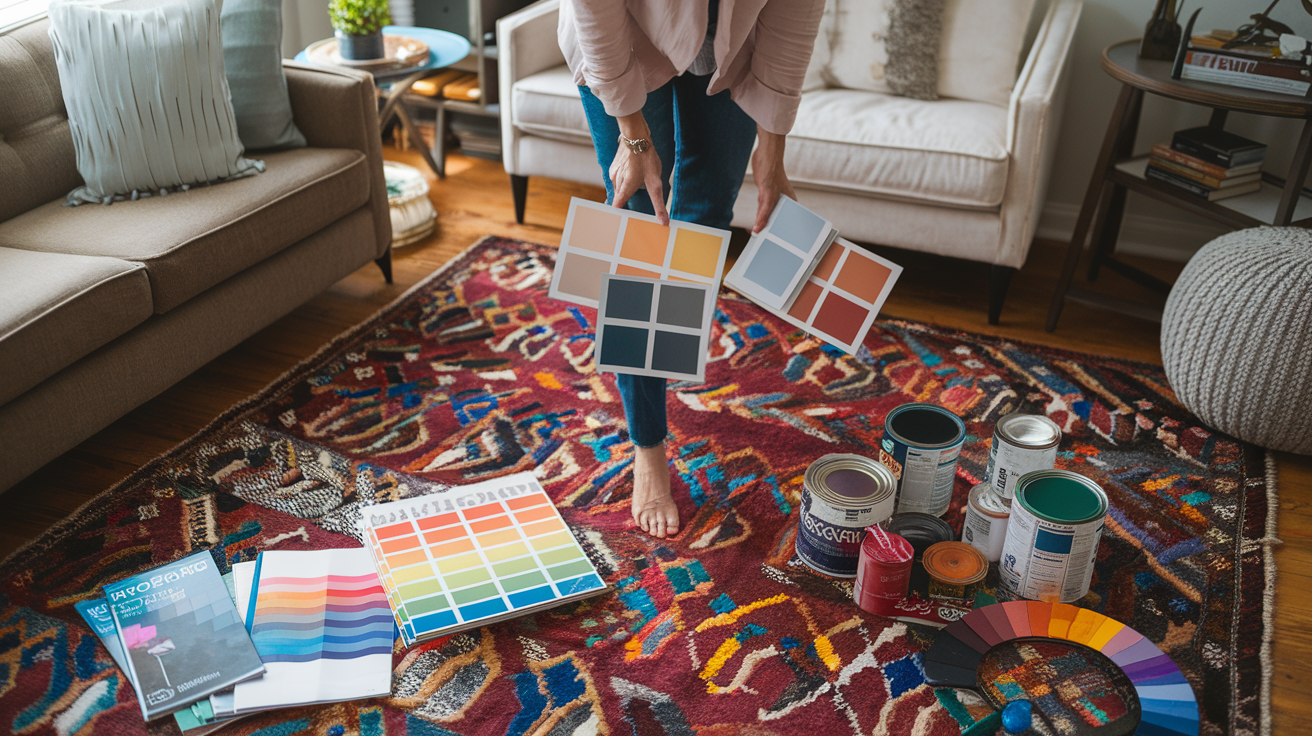
Working with Neutral Spaces: Adding Controlled Color with Oriental Rugs
Neutral spaces are like blank canvases—beautiful but sometimes lacking personality. That’s where oriental rugs come in. They’re your secret weapon for introducing color without committing to painting an entire wall.
Gray, beige, or white rooms absolutely shine when you drop in a rug with rich terracotta, navy, or emerald tones. The key? Pick a rug with one dominant color that really speaks to you, then pull that shade into a few carefully chosen accessories.
A cream-colored living room transforms with a Persian rug featuring deep blues and touches of burgundy. Add two blue throw pillows and a small burgundy vase, and suddenly your neutral space has character without looking busy.
Remember: neutral doesn’t mean boring. It means you get to control exactly where the eye travels.
Harmonizing with Bold Wall Colors Without Overwhelming
Bold wall colors already make a statement. Your rug should complement, not compete.
If you’ve got deep teal walls, skip the equally intense rug colors. Instead, look for pieces with subtler variations of your wall color in smaller patterns, or choose rugs with complementary colors that balance the boldness.
For example:
- Burgundy walls + Rug with cream background and burgundy accents = Harmony
- Navy walls + Rug with golden yellows and touches of blue = Perfect balance
- Green walls + Rug with neutral background and forest accents = Sophisticated pairing
The 60-30-10 rule works wonders here: let your walls be the 60%, your furniture the 30%, and your rug can contribute to that final 10% pop of accent color.
Bridging Disconnected Color Schemes in Open Floor Plans
Open floor plans are amazing until you realize each “zone” needs its own identity while still flowing together. That’s when a thoughtfully chosen oriental rug becomes your best friend.
Say your kitchen has cool blue-gray tones while your living area leans warm with taupe and cream. A rug that contains both cool and warm elements creates that visual bridge you need. Look for pieces with both blue and taupe motifs within the pattern.
The trick is finding what designers call a “transition color” that appears in both spaces. Your rug should feature this color prominently, acting as the connector.
This approach works between any disconnected spaces. Even if your dining room is dramatically different from your living room, the right rug placement creates flow and intention rather than jarring transitions.
Layering Multiple Rugs: Creating Cohesive Color Stories
Layering rugs isn’t just trendy—it’s a genius way to define spaces and build complex color stories in your home.
Start with a larger, more neutral base rug (think jute or sisal) and layer a smaller, more vibrant oriental rug on top. This technique lets you introduce bold patterns without overwhelming the space.
Some foolproof combinations:
- Natural fiber base + Jewel-toned oriental rug
- Solid neutral wool rug + Geometric pattern oriental piece
- Muted large rug + Smaller antique rug with rich reds
The magic happens when you ensure at least one color connects between the layers. A cream jute with a navy-and-cream Persian creates depth while maintaining visual harmony.
Pro tip: Rotate your layered rugs seasonally—the same top rug can look completely different when paired with various base rugs.
Seasonal Adjustments: Accessories That Complement Your Rug Colors
Your oriental rug doesn’t need to be swapped seasonally—it’s the foundation that stays while everything around it shifts.
In summer, pull out the lighter tones from your rug pattern. If your rug has hints of pale blue amid deeper colors, bring in linen throw pillows in that exact shade. Come fall, focus on the amber or russet tones with matching throws and candle holders.
This approach works because you’re not changing your core design—you’re simply highlighting different aspects of your rug’s existing color story.
Quick seasonal switch-ups:
- Spring: Focus on any greens or softer blues in your rug
- Summer: Highlight lighter neutrals and clearer colors
- Fall: Emphasize russets, golds, and deeper reds
- Winter: Play up navy, burgundy, and forest green elements
The beauty of oriental rugs is their multi-seasonal appeal—they contain almost every color you’d need throughout the year.
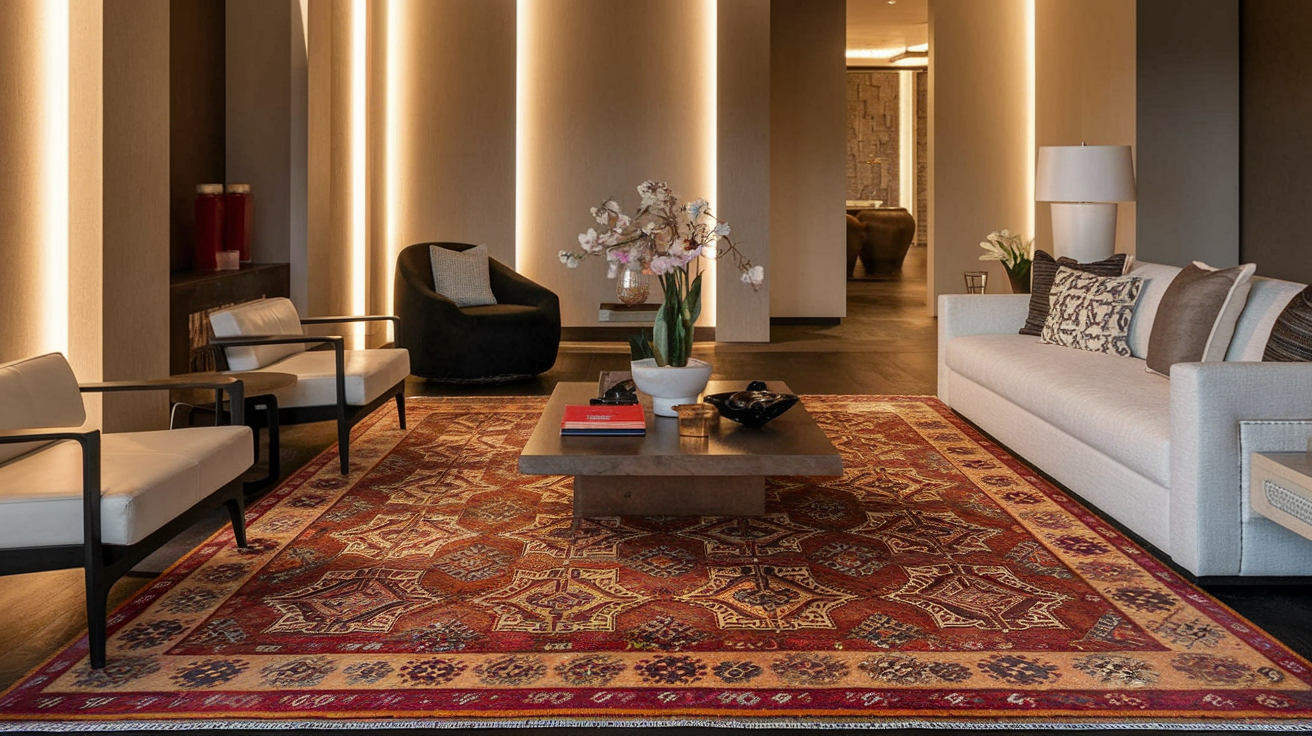
Selecting the perfect Oriental rug requires a thoughtful approach to color theory and a deep understanding of your existing interior design elements. By mastering the basics of color relationships, identifying your room’s existing palette, and exploring the rich color traditions of different regional rug styles, you can make choices that elevate your entire space. Whether you’re working with bold Persian designs or subtle Tibetan patterns, the right rug can serve as either a harmonious foundation or a striking focal point.
Remember that your Oriental rug represents both an aesthetic choice and a lasting investment in your home’s character. Take time to consider how your selection will interact with changing light conditions and seasonal decor adjustments. Don’t hesitate to request sample swatches when possible, and consider consulting with a design professional for particularly challenging spaces. With the strategies outlined in this guide, you’ll be well-equipped to select an Oriental rug that beautifully complements your color palette while bringing timeless artistry into your home.
Popular products
-
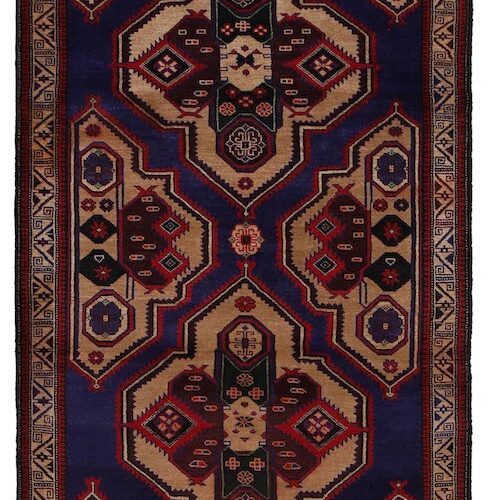 Handmade Afghan Baluchi Wool Rug 6'7" x 4'1" | Navy/Burgundy Geometric Design - Free USA Shipping!
$355.00
Handmade Afghan Baluchi Wool Rug 6'7" x 4'1" | Navy/Burgundy Geometric Design - Free USA Shipping!
$355.00
-
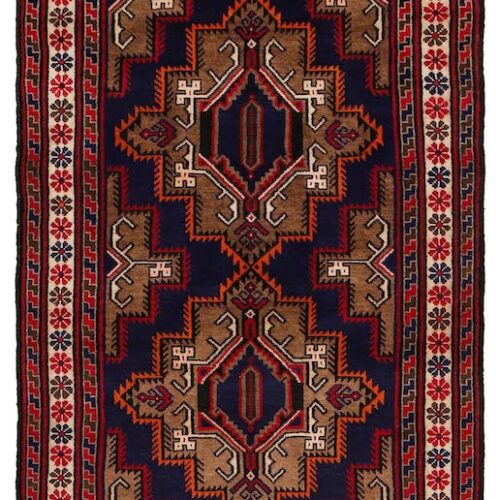 Handmade Afghan Wool Rug – 5'7" x 3'7" | Navy, Tan & Red Geometric Medallion Design | Durable & Stain-Resistant
$199.00
Handmade Afghan Wool Rug – 5'7" x 3'7" | Navy, Tan & Red Geometric Medallion Design | Durable & Stain-Resistant
$199.00
-
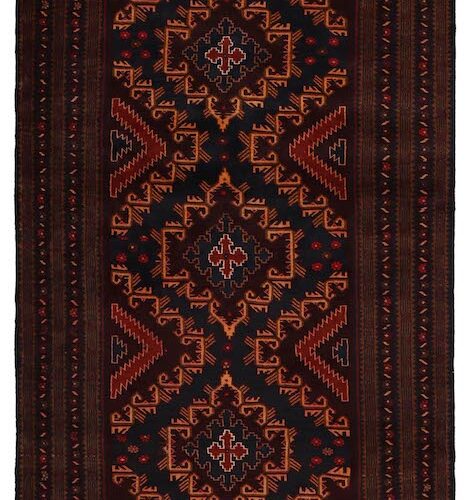 Handmade Afghan Tribal Wool Rug - 7'5" x 4'3" | Deep Indigo with Geometric Medallion Design | Free USA Shipping
$389.00
Handmade Afghan Tribal Wool Rug - 7'5" x 4'3" | Deep Indigo with Geometric Medallion Design | Free USA Shipping
$389.00
-
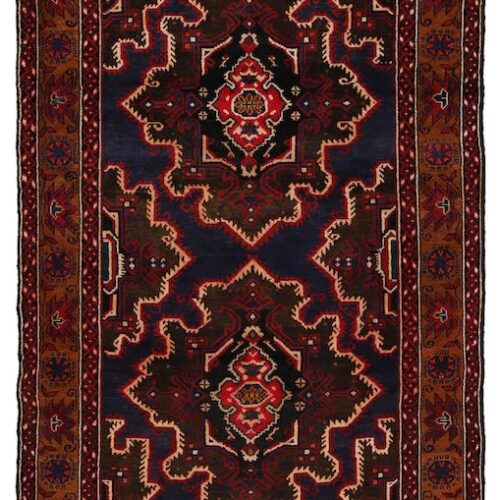 Handmade Afghan Tribal Wool Rug 6'2" x 3'11" - Navy & Burgundy Medallion Design | Free USA Shipping 🌟
$344.00
Handmade Afghan Tribal Wool Rug 6'2" x 3'11" - Navy & Burgundy Medallion Design | Free USA Shipping 🌟
$344.00
